
.jpg)
The meeting has brought together Foreign Ministers and senior representatives from BRICS member and partner nations under India’s chairship theme, “Building for Resilience, Innovation, Cooperation and Sustainability.” The theme reflects Prime Minister Narendra Modi’s “Humanity First” and people-centric vision for the BRICS grouping.
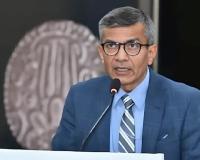
In his opening remarks, Dr. S. Jaishankar stressed that peace and security remain central to the global order and warned that recent international conflicts have reinforced the urgent need for dialogue and diplomacy. He stated that discussions among member nations must focus on advancing sustainable development while upholding the principles of equity and common but differentiated responsibilities.
The External Affairs Minister highlighted the transformative impact of technological advancements on the global landscape and said innovation can be effectively used to promote good governance and inclusive growth. He also underscored the shared commitment among BRICS nations to strengthen cooperation against terrorism.
Dr. Jaishankar thanked participating countries for their continued commitment to the BRICS framework and said member and partner nations remain in close and regular contact through bilateral and multilateral engagements. He noted that the current meeting provides an important platform to exchange perspectives and build convergences on critical global matters.
Emphasising the growing challenges confronting the international community, Dr. Jaishankar said ongoing conflicts, economic uncertainty, and disruptions related to trade, technology, and climate are reshaping the global environment. He stated that there is increasing global expectation for BRICS to play a constructive and stabilising role during this period of volatility.
The Minister further said that several countries continue to face serious challenges related to energy, food, fertiliser, and health security, adding that BRICS can play a more effective role in helping nations respond to these crises. He encouraged all delegations to actively contribute their perspectives to ensure meaningful outcomes from the discussions.
Among the prominent leaders attending the meeting are Brazilian Foreign Minister Mauro Vieira, Russian Foreign Minister Sergey Lavrov, Iranian Foreign Minister Seyed Abbas Araghchi, Indonesian Foreign Minister Sugiono, Malaysian Foreign Minister Dato’ Seri Utama Mohamad bin Haji Hasan, United Arab Emirates Minister of State for Foreign Affairs Khalifa Shaheen Al Marar, and South African Foreign Minister Ronald Lamola.
During the meeting, Foreign Ministers of BRICS member countries are expected to exchange views on major global and regional developments of mutual interest. The delegates will also call on Prime Minister Narendra Modi later in the day.
On the second day of the summit, BRICS member and partner countries will participate in a dedicated session titled “BRICS@20: Building for Resilience, Innovation, Cooperation and Sustainability.” Another key session will focus on reforms of global governance and the multilateral system.
The last meeting of BRICS Foreign Ministers was held on the sidelines of the 80th Session of the United Nations General Assembly in September last year.
The New Delhi meeting assumes major geopolitical significance as BRICS nations attempt to strengthen coordination amid intensifying global conflicts, economic disruptions, and rising demands for reforms in international governance institutions. India’s leadership during the discussions is expected to shape the bloc’s collective approach toward security, sustainability, economic cooperation, and multilateral engagement in the coming years.
About The Author


.jpg)
.jpg)




Comment List